
Plasterers in NottinghamSmooth Walls,Ready to Decorate
Flat, sound, paint-ready walls and ceilings from plasterers with years of trade experience, so your decorating looks right and stays right.
- 5 years trading
- Trades with 10–30 years’ experience
- Free site visit & written quote
- Gas Safe & NICEIC/NAPIT trades
Service overview
Plastering explained
What it is
Plastering is the process of applying a smooth finish to walls and ceilings. It covers skimming over existing surfaces, re-plastering walls back to brick, plasterboarding and skimming ceilings, patching after electrical or plumbing work, and preparing walls before tiling or decorating. A good plaster finish is the base everything else sits on.
Who it’s for
Our plastering service suits homeowners redecorating a room, people who’ve had rewiring or new pipework that left chased walls, landlords refreshing a rental between tenants, and anyone renovating a dated property with cracked or artexed surfaces. It’s also part of every kitchen, bathroom and full renovation we carry out.
When you need it
You’ll need plastering when walls are cracked, uneven or crumbling, when old wallpaper has pulled the surface away, when ceilings are sagging or artexed, or after any work that has damaged walls. If paint keeps showing every lump and patch, or you can see cracks returning after filling, it’s time to have the surface properly skimmed or replastered.
Why professional help matters
Plastering looks simple and is very hard to do well. Getting a large wall or ceiling flat, without ripples, trowel marks or weak spots, takes years of practice. Poor plastering shows through every coat of paint and can crack or blow. Our plastering contractors are part of a team where every contractor has between 10 and 30 years of experience in their trade.
From our projects
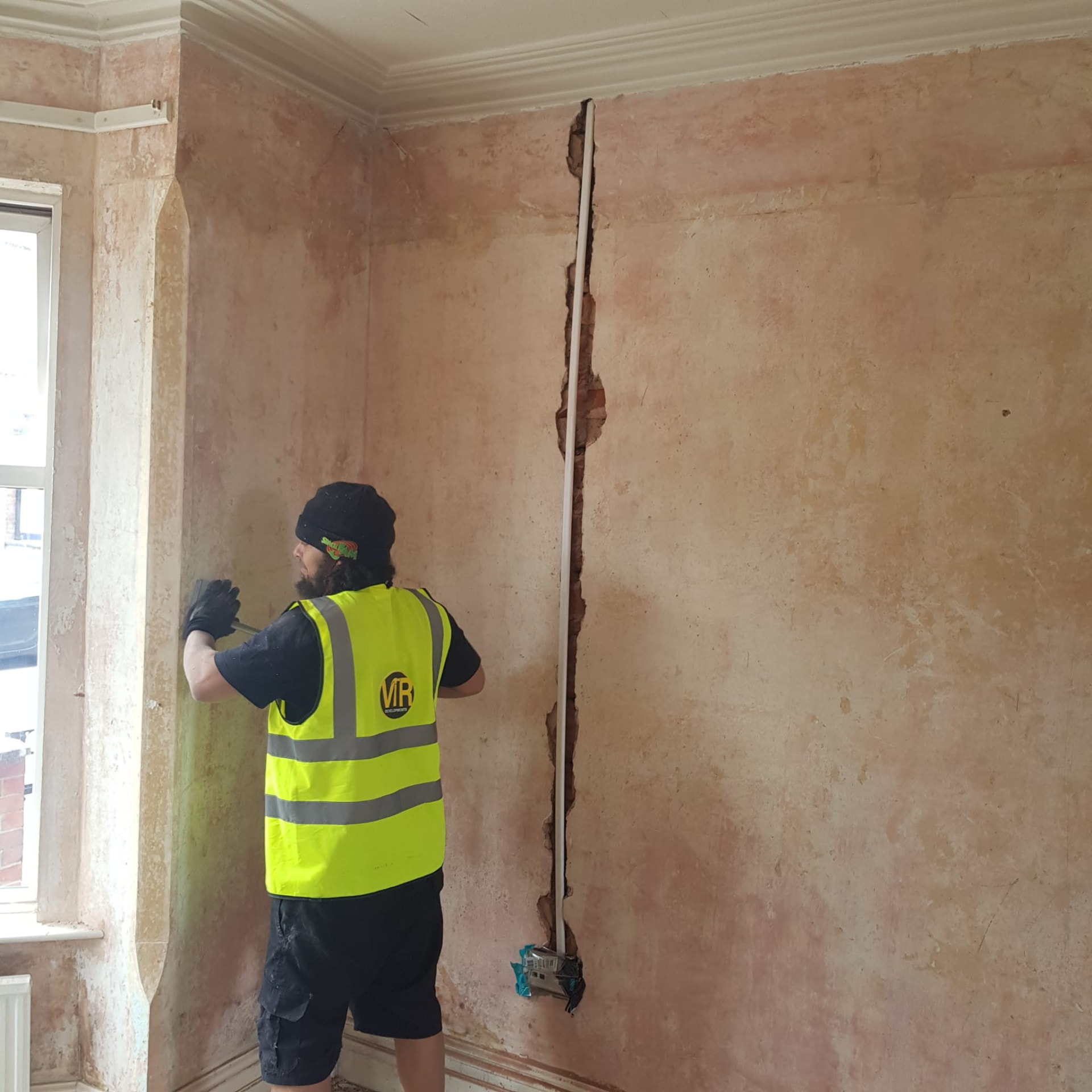
Plastering in action
Bathroom wall preparation
The cost of waiting
What happens if it’s left
Cracks and loose plaster rarely stay the same. Blown plaster sounds hollow and eventually comes away from the wall. Cracks widen with seasonal movement and let moisture in. Sagging ceilings can become dangerous if the boards or laths are failing.
Painting over poor surfaces wastes paint and labour and still looks wrong. Filling the same cracks year after year costs more over time than doing the job once. And if plaster is failing because of damp, covering it up hides a problem that will damage new decoration too.
Common mistakes we put right
- Painting straight onto fresh plaster without a mist coat, causing peeling.
- Skimming over blown or loose plaster instead of removing it first.
- Filling large cracks repeatedly rather than finding why they keep coming back.
- Plastering over damp walls without addressing the cause.
- Rushing drying time before decorating.
Our process
How your plastering job runs
- Step 1
Free site visit
We check the condition of the walls and ceilings and what finish you need.
- Step 2
Written quotation
A clear quote setting out exactly which areas will be plastered and how.
- Step 3
Protection & preparation
Floors and furniture are protected, loose material removed and surfaces prepared.
- Step 4
Plastering
Boarding, bonding or skimming as needed to a flat, smooth finish.
- Step 5
Clean & handover
The area is cleaned and you’re advised on drying time before decorating.
What you get
Why choose VTR for plastering
Paint-ready finish
Smooth, flat walls that make decorating quicker and better-looking.
Sound surfaces
Loose and blown plaster is dealt with properly, not hidden.
Experienced trades
Contractors with 10–30 years’ experience in their trade.
Part of a wider team
Need decorating or flooring next? It’s handled by the same team.
Tidy working
Floors and furniture protected, and the area cleaned when we’re done.
Free quote
A free site visit and written quotation before any work.
In detail
Types of plastering we carry out
Skimming
Skimming applies a thin finishing coat over existing plaster or plasterboard. It’s the usual fix for walls that are sound but marked, patched or uneven, and for covering artex or textured ceilings.
Re-plastering and patching
Where plaster has blown, crumbled or been heavily damaged, it’s removed back to the backing and new plaster applied. Patching is used after rewiring, plumbing alterations or the removal of fixtures.
Plasterboarding and ceilings
Damaged ceilings and new stud walls are boarded and then skimmed. Boarding over old, cracked ceilings is often quicker and cleaner than removing them entirely.
Preparation for tiling and decorating
In kitchens and bathrooms, walls need to be flat and suitable for tiles. In living areas they need to be smooth enough for paint. We prepare walls to suit the finish going on them.
Single rooms or whole houses
We plaster single rooms and ceilings as well as complete properties during a full renovation, so the finish is consistent throughout.
Planning guide
What to know before you start
Choosing between skimming and re-plastering
Not every wall needs to go back to brick. If the existing plaster is firmly bonded and the wall is reasonably flat, a skim coat is usually enough to give a smooth, paint-ready surface. If the plaster sounds hollow when tapped, crumbles at the edges or has come away in sections, it needs to be removed and replaced. We check every wall at the site visit and recommend the approach that gives a lasting result without doing more work than is needed.
Plastering in older properties
Many homes across Nottingham, Derby and Mansfield have older lath-and-plaster ceilings, solid walls and decades of patch repairs. These surfaces behave differently to modern plasterboard. Old ceilings can sag or crack as the laths age, and walls may have been repaired with mismatched materials over the years. Over-boarding a tired ceiling, or carefully removing failed sections before making good, avoids repeated cracking and gives a consistent finish across the room.
Plastering as part of a renovation
Plastering sits at a crucial point in any renovation. It comes after first-fix plumbing and electrics, so cables and pipes are already in the walls, and before kitchens, bathrooms, flooring and decorating. If plastering is rushed or done out of order, everything that follows is affected. Within a VTR project the plasterer is booked at the right time, with the electrician and plumber finished and the decorator lined up to follow once the walls are dry.
Getting the best from new plaster
Fresh plaster needs time to dry, and the drying time depends on the thickness applied, the temperature and how well the room is ventilated. Painting too early traps moisture and can cause the paint to peel or bubble. New plaster also needs a diluted first coat of paint, known as a mist coat, so the finishing coats bond properly. We’ll give you clear advice on drying and decorating at the end of the job, or our decorating trade can finish the room for you.
Plastering for landlords and rental properties
Between tenancies, walls take a beating: picture hooks, furniture scuffs, tape marks and sometimes damp patches from poor ventilation. Patching and skimming the worst areas before redecorating gives a clean, consistent finish that photographs well and lasts longer than painting over damage. Where several rooms need attention, planning the plastering and decorating together keeps the property empty for as short a time as possible.
Questions
Plastering FAQs
Related services
How much does plastering cost in Nottingham?+
Every property is different, so we don’t publish fixed prices. We visit free of charge, assess the job and give you a written quotation so you know the scope before any work starts.
How long does it take to plaster a room?+
It depends on the size of the room and whether walls need skimming or full re-plastering. We’ll give you a timescale with your quote.
How long before I can paint new plaster?+
Fresh plaster needs to dry fully before decorating. Drying time varies with thickness, temperature and ventilation; we’ll advise you on the day.
Can you plaster over artex?+
Yes, artex and textured ceilings can usually be skimmed to a smooth finish. We’ll check the surface at the site visit.
Do you offer a guarantee?+
Renovation projects come with a 3-month workmanship guarantee. Ask us at the site visit how this applies to your plastering job.
Do you also decorate after plastering?+
Yes. Painting and decorating is one of our trades, so we can finish the room for you.
Do you cover Derby and Beeston?+
Yes. We cover Nottingham, Derby, Mansfield, Sheffield, Loughborough and surrounding towns including Beeston and West Bridgford.
Is plastering an emergency service?+
We are not a 24-hour emergency call-out service. Ring us during opening hours and we’ll tell you honestly how quickly we can attend and what can be done in the meantime.
Get your plasteringdone properly, once.
Free site visit, written quotation, and one team handling every trade. No obligation.